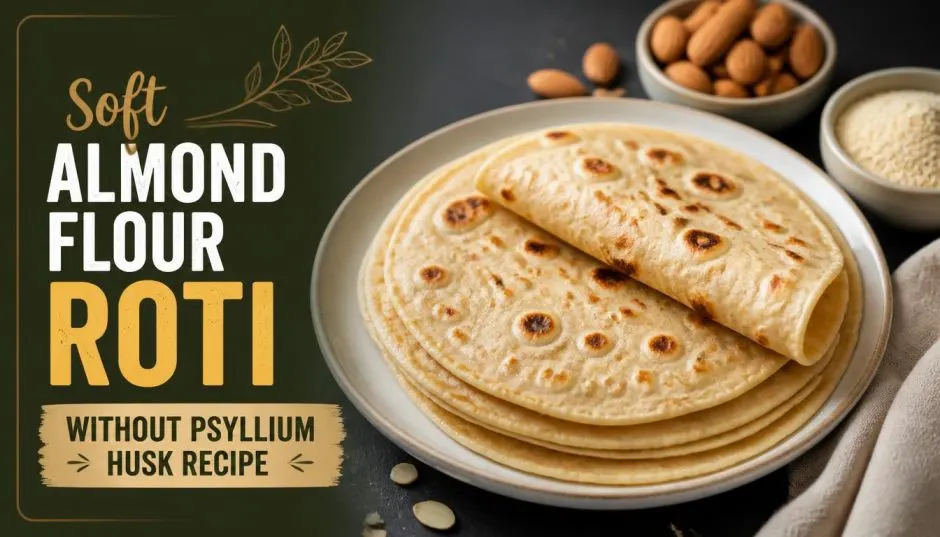
Almond flour roti is a lifesaver for anyone avoiding wheat. It is low-carb, gluten-free, and nutritious. But most recipes demand psyllium husk. That ingredient gives structure. It mimics gluten.
What if you cannot tolerate psyllium husk? Or you simply do not have it at home? I have been there. Finding a good almond flour roti without psyllium husk took me weeks of trial and error. My first attempts were disasters. The rotis crumbled. They fell apart on the pan.
After many failed batches, I finally figured it out. Here is everything I learned about making soft, pliable almond flour roti without psyllium husk.
Why Do Recipes Call for Psyllium Husk?
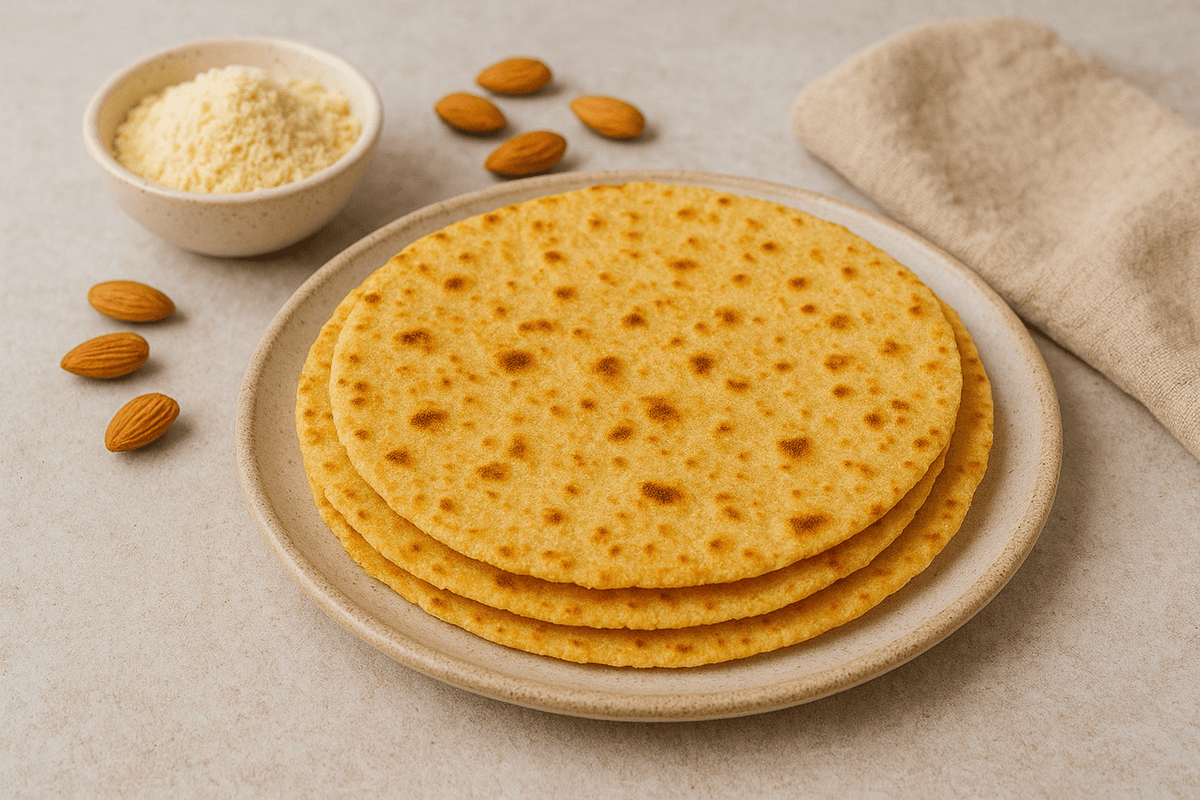
Psyllium husk is a common binder in gluten-free baking. It absorbs water and forms a gel. This holds the dough together. Without it, almond flour roti tends to crack and break.
Read Also: Can a Jamaican Food Restaurant Cook Jamaican Food Fresh Everyday?
Many keto roti recipes rely on psyllium husk. It gives a chewy, bread-like texture. But psyllium husk is not for everyone. Some people get digestive issues. Others dislike the taste. Some simply do not have it in their pantry.
My Kitchen Experiments
I tried many approaches. Some failed badly. Others produced edible but fragile rotis. Here is what I discovered.
First attempt: Just almond flour, salt, and water. The dough came together. But it cracked when I rolled it. The rotis fell apart on the pan. Complete failure.
Second attempt: Added an egg. Better binding. But the roti tasted too eggy. Not good with curries.
Third attempt: Used xanthan gum. This worked well. The dough was pliable. The rotis held together. But xanthan gum is expensive. Not everyone has it.
Fourth attempt: Ground flaxseed mixed with water. This created a flax egg. The rotis were soft. They held together nicely. This was my breakthrough.
The winner? A combination of almond flour, a binding agent, and the right technique.
3 Reliable Methods
After testing, I settled on three methods. Each produces a different texture. Pick based on what you have available.
1: Xanthan Gum Version
Xanthan gum is a common gluten-free binder. A little goes a long way. This recipe is simple and consistent.
Ingredients:
-
1 cup super fine almond flour
-
1 tablespoon xanthan gum
-
¼ teaspoon salt
-
¼ teaspoon baking powder (optional)
-
½ tablespoon olive oil or ghee
-
4 to 5 teaspoons warm water
Instructions:
-
Mix all dry ingredients in a bowl.
-
Add oil and water. Stir until dough forms.
-
Knead gently for 2 to 3 minutes. The dough should be smooth.
-
Wrap in plastic. Let rest for 10 minutes.
-
Divide dough into 6 equal balls.
-
Place each ball between two sheets of parchment paper.
-
Roll into thin circles.
-
Cook on a hot pan over medium heat. 60 seconds per side.
Texture: Soft and slightly chewy. Holds up well to curries.
Pros: Reliable binding. Easy to find online.
Cons: Xanthan gum costs more. Some people dislike its texture.
2: Flaxseed Meal Version
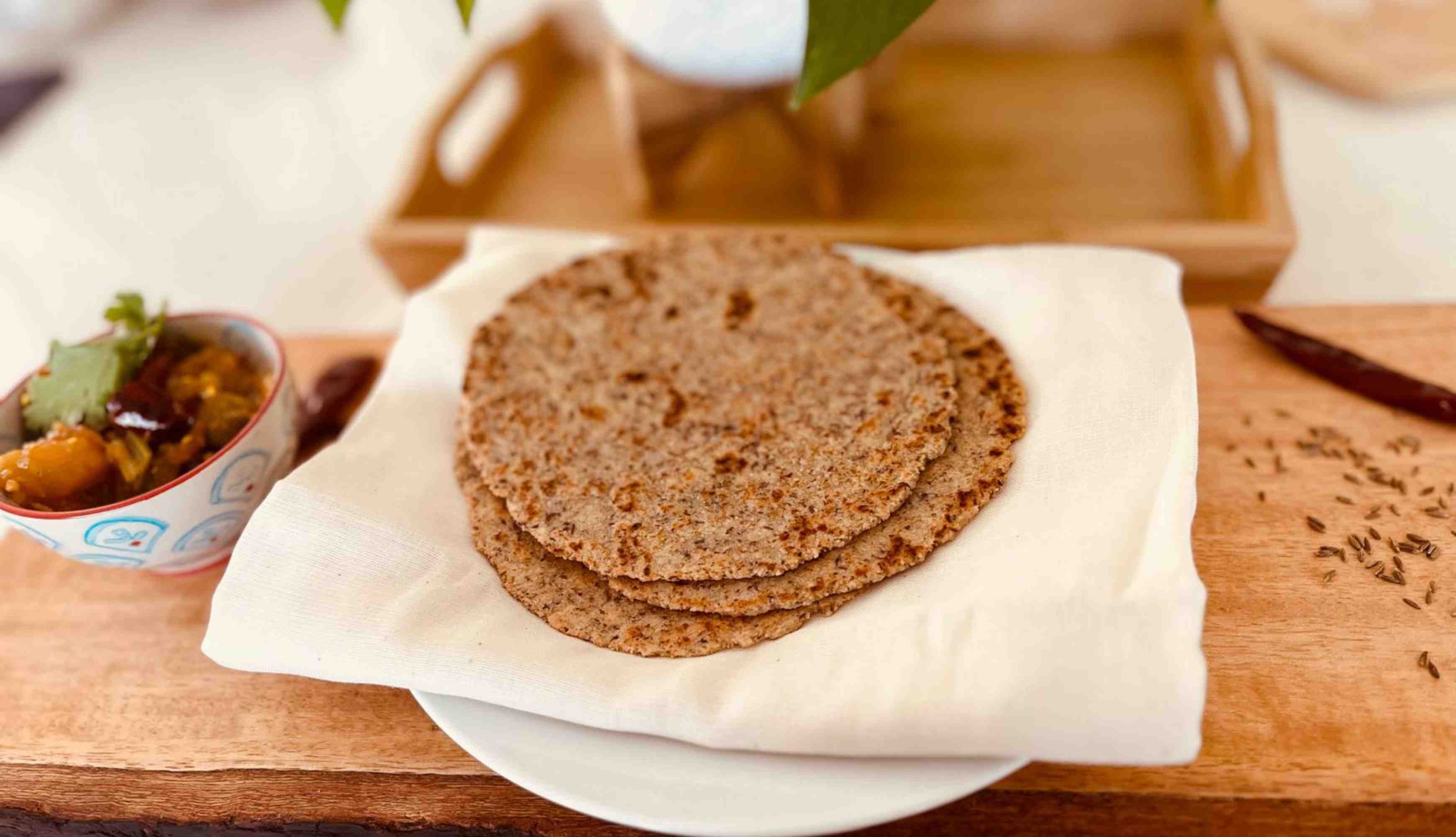
Flaxseed meal is an excellent natural binder. Mixed with water, it forms a gel. This is my go-to method.
Ingredients:
-
1 cup almond flour
-
1 tablespoon ground flaxseed
-
3 tablespoons warm water
-
¼ teaspoon salt
-
½ tablespoon olive oil or ghee
-
2 to 3 tablespoons warm water (extra)
Instructions:
-
Mix ground flaxseed with 3 tablespoons warm water. Let sit for 5 minutes. It becomes a gel.
-
In a bowl, combine almond flour and salt.
-
Add the flax gel and oil. Mix well.
-
Add extra warm water gradually. Keep going until a soft dough forms.
-
Knead for 3 to 4 minutes.
-
Cover and let rest for 10 minutes.
-
Divide into 4 to 6 portions.
-
Roll out between parchment paper.
-
Cook on a hot pan until golden brown spots appear.
Texture: Soft and slightly nutty. Flax adds a pleasant flavor.
Pros: Affordable. Easy to find. Adds fiber and omega-3s.
Cons: Slightly denser than xanthan gum version.
3: Egg-Based Version
Eggs are powerful binders. They give structure to gluten-free baked goods. This version is quick and uses pantry staples.
You Must Also Like: Postbiotic Paleo Snacks: Heal Your Gut While Staying Grain-Free
Ingredients:
-
1 cup almond flour
-
1 large egg
-
¼ teaspoon salt
-
½ tablespoon olive oil or ghee
Instructions:
-
Beat the egg in a bowl.
-
Add almond flour, salt, and oil. Mix until dough forms.
-
Knead for 2 minutes.
-
Let rest for 5 minutes.
-
Divide into 4 portions.
-
Roll out between parchment paper.
-
Cook on a hot pan. 1 to 2 minutes per side.
Texture: Slightly firmer. Holds together well.
Pros: No special ingredients needed. High in protein.
Cons: Eggy taste may not pair well with all curries.
The Simplest 4-Ingredient Version
Some recipes use just almond flour, salt, oil, and water. This works if you are careful.
Ingredients:
-
1â…› cup almond flour
-
1 teaspoon oil
-
¼ teaspoon salt
-
â…› cup water
Instructions:
-
Combine almond flour, oil, and salt in a bowl.
-
Add half the water. Mix to combine.
-
Slowly add remaining water as needed.
-
Knead well with your hands for five minutes.
-
You will get a smooth, pliable dough.
-
Cover and let rest for 10 minutes.
-
Divide into four portions.
-
Roll out and cook on a hot pan for 1-2 minutes per side.
Texture: Thicker. Similar to bhakri. Satisfying bite.
Pros: Minimal ingredients. No specialty binders.
Cons: More fragile. Requires careful handling.
Tips That Saved My Rotis
Use Super Fine Almond Flour
Blanched, super fine almond flour works best. It creates a smoother dough. Coarse almond meal gives grainy rotis.
Rest the Dough
Do not skip resting. It lets the flour absorb moisture fully. The dough becomes easier to handle.
Roll Between Parchment Paper
Almond flour dough is delicate. Rolling between parchment prevents sticking. A tortilla press makes it even easier.
Watch Your Heat
Medium heat works best. Too high and the roti burns. Too low and it dries out.
Do Not Overwork
Almond flour dough does not need much kneading. Overworking makes it tough.
Problems I Faced and Fixed
Dough too crumbly: Add water one teaspoon at a time. Almond flour absorbs differently.
Roti cracks when rolling: Rest the dough longer. Roll gently between parchment.
Roti sticks to pan: Use a non-stick pan. Lightly oil the surface.
Roti too dry: Reduce cooking time. Almond flour browns fast.
Is Almond Flour Roti Good for You?
Almond flour is nutrient-dense. It gives you healthy fats, vitamin E, and magnesium. It is naturally low in carbs. This makes it good for keto and diabetic diets.
One small roti has about 89 calories, 7g fat, 4g carbs, 2g fiber, and 3g protein. Compare that to wheat roti. Similar calories but higher carbs and lower fat.
My Honest Take
Making almond flour roti without psyllium husk is doable. The trick is finding the right binder for your needs. Xanthan gum gives the most reliable results. Flaxseed meal is my personal favorite. It is natural and affordable. The 4-ingredient version works in a pinch.
Start with the flaxseed method if you want a balanced approach. It is budget-friendly and produces soft rotis. Pair them with your favorite curry. They hold up surprisingly well.
Give these recipes a shot. Adjust the water slowly. Rest the dough. Cook on medium heat. You will get the hang of it after a few tries. Happy cooking!